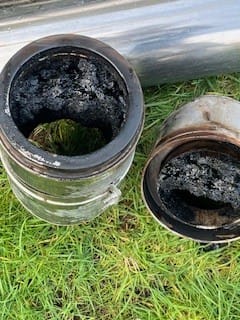
A serious Creosote build‑up in a twin‑wall flue system — and especially worrying given its proximity to a thatch property, where the fire risk is extremely high.
Severe tar accumulation inside a twin‑wall system usually happens when:
- 🔥 Wood is wet or unseasoned
- 🔥 The stove is run slumbered for long periods (low burn, poor combustion) Slumbering causes flue gases to cool and condense.
- 🔥 Flue gas temperatures stay too low
- 🔥 Air controls are starved to “make the wood last longer” slumbering.
This can lead to:
- Internal chimney fires (even without visible flames)
- Structural compromise of the flue
- Ignition of surrounding materials, especially dangerous near thatch
- Corrosion and complete failure of the liner or twin‑wall system
How to Prevent Creosote Build up & Reduce Chimney Fire Risk
1. Use Only Dry, Seasoned Wood
- Wood with a moisture content of less than 20%
- Wood should be split, stacked, and air‑dried for 12–24 months
- Store under cover with good airflow
- Avoid burning: wet logs, painted/treated timber, pallets, rubbish, cardboard
Why: Wet wood creates smoke and tar (creosote), increasing chimney fire risk.
2. Burn Hot, Clean Fires
- Keep visible flames, not a slow smoulder
- Let fires get fully established with air vents wide open
- Use kindling first to warm the flue quickly
- Avoid long periods of slumbering or “overnight burn” settings
Why: Slumbering causes flue gases to cool and condense into creosote.
3. Maintain Proper Flue Temperature
- Aim for 250–350°C during normal operation
- Fit a stove thermometer to monitor performance
- Use smaller, regular loads of wood rather than large logs that cool the fire
Why: Hot flue gases prevent creosote condensation inside the chimney.
4. Finally arrange for your chimney flue to be Swept Regularly